Fractional Executives: A UK Founder’s Guide to Senior Leadership Without the Full-Time Hire
Fractional executives are senior leaders who work for your business part-time, on a retainer, instead of a permanent salary. You get the experience of a CMO, CFO or COO for a few days a month, and you pay a fraction of what a full-time hire would cost.
For most growing UK companies, that maths is the whole point. You have a real need for senior strategy. You do not yet have the revenue to support a £150,000 salary plus pension, bonus and recruitment fees. A fractional executive closes that gap.
Key Takeaways
- A fractional executive is a part-time senior leader who owns outcomes, not just advice.
- The model suits founders who need strategy but cannot justify a full-time hire yet.
- Fractional leadership costs far less than a permanent salary once you add employer costs and recruitment fees.
- Fractional consultants differ from ordinary consultants: they run the team and stay accountable, rather than hand over a report and leave.
- The strongest use case is fixing underperforming marketing spend and building a growth system that survives after they go.
- Many founders start fractional, then hire full-time once the role pays for itself.
What a Fractional Executive Actually Does
The word “fractional” describes the time commitment, not the seniority. A good fractional executive brings the same depth they would to a full-time C-suite role. They just spread it across two or three companies.
In practice, a fractional CMO will set the marketing strategy, decide where the budget goes, manage the agencies and the in-house team, and report progress to you the way a permanent director would. They make calls. They carry the result.
That accountability is the line between fractional leadership and a normal advisory arrangement. An adviser tells you what they would do. A fractional executive does it, then answers for whether it worked.
Fractional Executives vs Consultants vs Full-Time Hires
Founders often confuse these three options, and the wrong choice wastes both money and months. Here is the honest comparison.
| Option | Time commitment | Who owns the result | Typical UK cost | Best for |
|—|—|—|—|—|
| Full-time executive | 5 days a week | The hire | Salary plus 20-30% in employer costs | Established companies with the revenue to support the role |
| Fractional executive | 1-3 days a week | The fractional leader | Monthly retainer, a fraction of full salary | Founders who need senior strategy and ownership without the full cost |
| Consultant | Project-based | You, after they leave | Day rate or fixed project fee | A specific, bounded problem with a clear endpoint |
The trap is hiring a consultant when you need leadership. You get a polished document, a fresh sense of clarity, and then nobody to run the plan. The plan sits in a folder. Three months later nothing has changed and you are out the fee.
When a Founder Should Bring In Fractional Leadership
Not every business needs this. If you are pre-revenue and still testing whether anyone wants the product, a fractional CMO is premature. Fix the product first.
The model earns its place when these signs appear:
- Marketing spend is going out and you cannot say what it is buying you.
- You have a small marketing team, or an agency, but nobody senior steering them.
- Growth has flattened and the usual tactics have stopped moving the number.
- You are spending your own time on marketing decisions you are not qualified to make, and it is pulling you away from the work only you can do.
Any one of those is a reason to look at part time executives. Two or more together is a strong signal you are leaving money on the table every month you wait.
What Fractional Executives Cost in the UK
The real cost question is not the retainer. It is the comparison.
A permanent marketing director in the UK commands a substantial salary before you add pension, National Insurance, bonus, equipment and the recruitment fee to find them, which a search firm typically charges as a percentage of first-year pay. Get the hire wrong and you repeat the whole cost.
A fractional executive carries none of that overhead. You pay a monthly retainer tied to days of work. You can start small, scale up when results justify it, and end the arrangement without redundancy cost if the need changes. For most founders the total annual spend on a fractional CMO comes in well under half the true cost of the equivalent full-time hire.
That difference is why fractional consultants have moved from a stopgap to a deliberate choice. You can explore CMO consulting to see how a retainer maps to days and deliverables.
How to Get Value From a Fractional Executive in the First 100 Days
The biggest mistake founders make is treating the first month as a settling-in period. It should not be. A senior leader who has done this before can move fast.
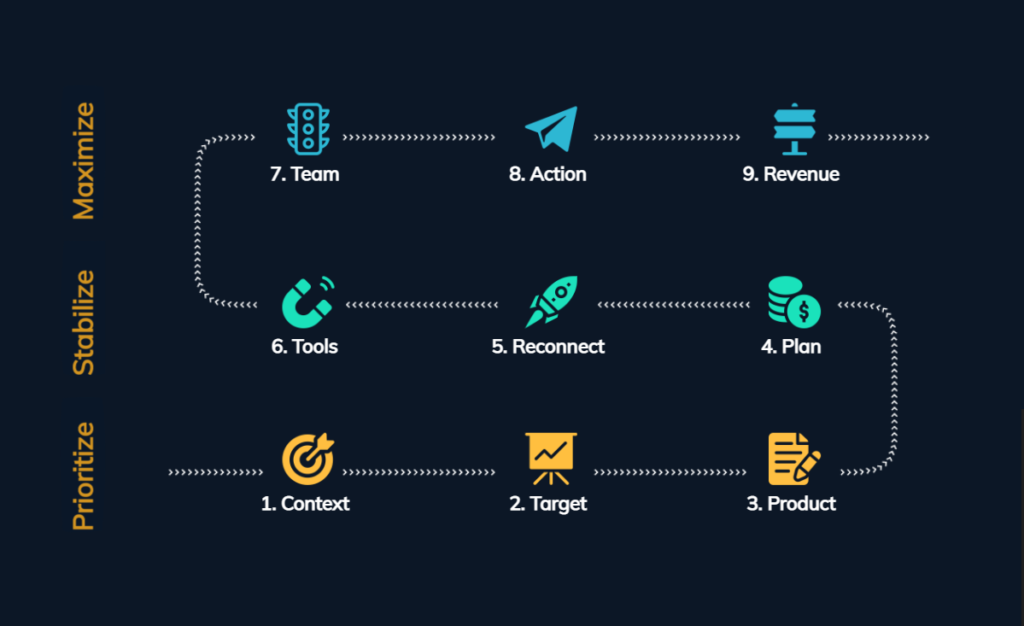
A sensible early sequence looks like this. Audit what is already running and stop the spend that is not working. Set one or two growth priorities the whole team can name. Put reporting in place so you can see, weekly, whether the number is moving. Build or fix the team that has to deliver it after the strategy is set.
By day 100 you should have a working growth system, not a slide deck. That is the standard worth holding any fractional leader to, and it is the thinking behind the 100 days fast track.
The Risk Nobody Mentions
Fractional leadership has a real downside, so here it is plainly. A fractional executive split across several clients can spread too thin. If your business needs daily hands-on direction during a crisis, part-time cover may not be enough, and you should say so before you sign anything.
Ask how many other clients they carry. Ask who covers the team when they are not in. Ask what happens in a bad week. A good fractional executive answers those questions without flinching, because they have systems that work without them present every day. That is the difference between hiring leadership and hiring availability.
FAQ
What is a fractional executive?
A fractional executive is a senior leader, such as a CMO, CFO or COO, who works for your business part-time on a contract basis. You get board-level experience for a few days a month instead of paying a full-time salary.
How much do fractional executives cost in the UK?
Most fractional executives charge a monthly retainer based on days per month. A typical engagement runs from a couple of days a month up to two or three days a week, priced well below a permanent salary plus the usual employer costs.
How is a fractional executive different from a consultant?
A consultant usually advises and hands over a report. A fractional executive sits inside your business, owns outcomes, manages the team and stays accountable for results over months, not a single project.
When should a founder hire a fractional executive?
When you need senior decision-making but cannot justify a full-time hire yet. Common triggers are stalled growth, marketing spend that is not converting, or a small team with no one steering strategy.
Can a fractional executive become full-time later?
Often, yes. Many founders use a fractional CMO to build the strategy and the team first, then hire a permanent leader once the role pays for itself.
Ready to Put Senior Marketing Leadership in Place?
If your marketing spend is not converting and nobody senior is steering it, a fractional CMO fixes both without the full-time cost. Book a call and we will work out whether the model fits your numbers, and what the first 100 days would look like for your business.