Fractional Executives: A UK Founder’s Hiring Guide
A fractional executive is a senior leader who runs part of your business part time, usually one to three days a week, on a rolling contract. You get the experience of a director who has done the job before, at a fraction of a full-time salary, without the recruitment fee or the long notice period.
For UK founders, this model has quietly become one of the most practical ways to add senior firepower. You buy the judgement you need now and you skip the cost you cannot yet carry.
Key Takeaways
- Fractional executives work part time on rolling contracts, giving you board-level skill without a full-time wage bill.
- The model suits companies that have outgrown the founder running a function alone but cannot yet justify a permanent senior hire.
- Fractional leadership is hands-on and accountable. The person owns outcomes, manages people and makes calls.
- Cost runs on a monthly retainer tied to days per month, which keeps spend predictable.
- Marketing is the most common first fractional role, because that is where founders waste the most money without a senior head.
- Always agree clear targets and a review point before the first day. Vague briefs waste the best part of the engagement.
What a fractional executive actually does
The word “fractional” describes the time commitment, not the seniority. These are full directors who choose to split their week across two or three companies. A fractional CMO, CFO or COO carries the same authority a full-time hire would, just across fewer days.
The difference shows up in how they work. Part time executives have learned to cut straight to the decisions that move the number. They have small windows, so they spend them on strategy, hiring and the two or three priorities that matter. The busywork goes to your team.
This is where fractional consultants and fractional executives part company. A consultant studies the problem and hands you a document. A fractional executive sits in the chair, owns the plan and stays on the hook when it ships.
Why UK founders are turning to fractional leadership
Three pressures push founders towards this model.
The first is cost. A full-time marketing director in the UK commands a salary, a bonus, pension contributions and often a recruitment fee on top. For a company doing a few million in revenue, that is a heavy bet on one person before you know they fit.
The second is the founder gap. Plenty of founders end up running marketing by default. They are good at the product and the sales, so the brand and the growth system get whatever time is left over. That arrangement holds until it does not, and revenue stalls.
The third is speed. Hiring a permanent senior leader takes months. A fractional executive can start within weeks and start fixing things in the first fortnight.
Fractional executive vs the alternatives
Founders weighing this choice usually compare four routes. Here is how they stack up.
| Option | Typical cost | Accountability | Time to value | Best for |
|—|—|—|—|—|
| Fractional executive | Monthly retainer, part time | Owns outcomes and the team | Weeks | Companies needing senior strategy plus delivery |
| Full-time director | Full salary, bonus, pension | Owns outcomes | Months to hire and ramp | Established firms with steady budget |
| Agency | Project or monthly fee | Delivers scope, not strategy | Weeks | Specific execution, set briefs |
| Consultant | Day rate or project fee | Advises, then exits | Days to a report | One-off diagnosis or a plan |
The fractional route wins when you need both the thinking and the doing, and you want one accountable person rather than a supplier you have to manage.
Where fractional executives deliver the most value
Marketing tends to be the first function founders hand over, and for good reason. It is the area where money leaks fastest without a senior head. A founder can pour budget into ads, content and tools, and still have no growth system underneath it.
A fractional CMO fixes the order of operations. They set the strategy, build the measurement, hire or redirect the team and turn scattered spend into a system that compounds. If marketing spend has been climbing while results flatline, that is the signal. You can explore CMO consulting to see how the model works in practice.
Finance and operations follow the same pattern. A fractional CFO brings forecasting and financial control before a company can support a full-time one. A fractional COO builds process where the founder has been holding everything together by memory.
How to hire a fractional executive well
The model fails for one reason above all others: a fuzzy brief. You bring in a senior person, then waste their limited days asking them to work out what you actually want.
Avoid that with four steps.
Write down the outcome you need in the first ninety days. Make it a number where you can. More qualified leads, a working forecast, a marketing team that ships without you.
Agree the day count and the retainer up front, and check it matches the scope. Two days a month cannot rebuild a function. Be honest about the size of the task.
Set a review point early, around the sixty to ninety day mark. Senior people respect a clear bar, and a check-in protects both sides.
Give them real authority. A fractional executive you have to ask permission for everything is an expensive advisor. Let them make the calls you hired them to make.
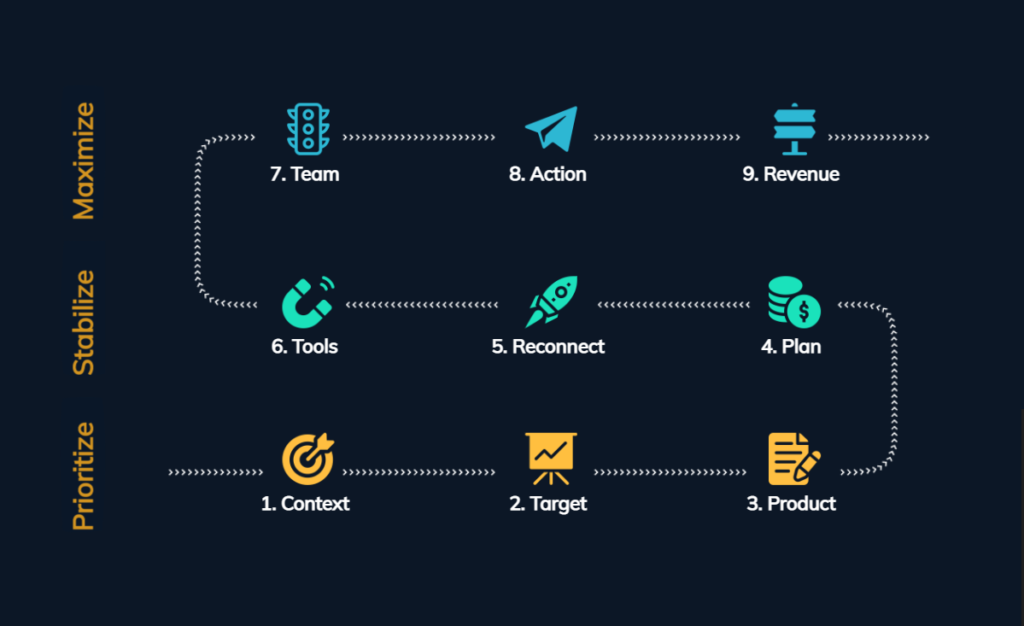
For founders who want a structured first three months, the 100 days fast track sets the targets and the sequence before the work begins.
Signs you are ready
You are ready for a fractional executive when most of these ring true.
The founder is still the de facto head of a function and it is holding the business back. Spend in that area keeps rising without a matching return. You know you need senior judgement but the revenue cannot yet carry a full-time package. You want momentum in weeks, not a hiring process that drags through the quarter.
If three or four of those land, the model fits.
FAQ
What is a fractional executive?
A senior leader who works for your business part time, usually one to three days a week, on a rolling contract. You get board-level experience for a fraction of a full-time salary.
How much do fractional executives cost in the UK?
Most charge a monthly retainer based on days per month. The range is wide depending on seniority and sector, and it sits well below a full-time package once you add salary, bonus, pension and recruitment fees.
What is the difference between a fractional executive and a consultant?
A consultant advises and hands you a report. A fractional executive owns the function, makes decisions, manages the team and stays accountable over months.
When should a company hire a fractional CMO?
When marketing spend keeps growing without a clear return, when the founder is still acting as head of marketing, or when you need senior strategy before a full-time hire makes sense.
How long do fractional engagements last?
Most run between six and eighteen months. Some convert into a permanent hire once the function is built. Others continue on a reduced footprint.
Ready to add senior marketing leadership?
If marketing spend keeps rising while growth stalls, a fractional CMO is the fastest way to fix the system without a full-time salary. Tell us where the business is stuck and we will show you what the first ninety days would cover. Book a call and we will map it out together.